Blog
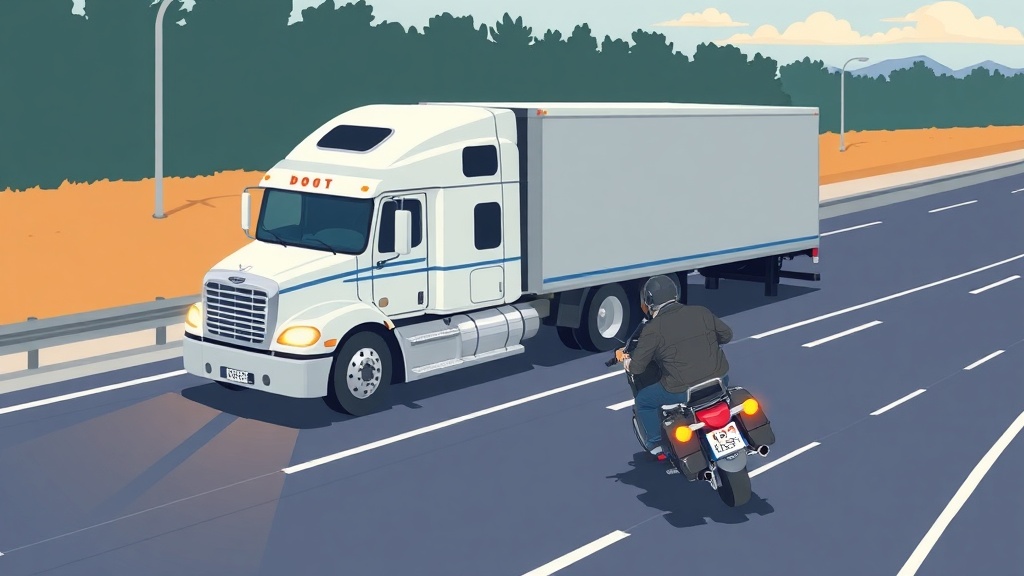
Motorcycle vs. Merging Truck Accidents: A Complete Legal Guide for Injured Riders
Why Merging Truck Accidents Are Among the Most Dangerous Crashes for Motorcyclists
When a commercial truck merges into a lane without detecting a motorcycle already traveling there, the consequences can be devastating. Unlike a collision between two cars, a truck-motorcycle merge accident involves an enormous disparity in size, weight, and structural protection. The motorcyclist absorbs nearly all the force of impact, often being pushed into barriers, other lanes, or off the road entirely.
This guide is designed to walk you through every dimension of this accident type — from understanding why these crashes happen and what federal trucking regulations govern them, to the steps you should take after a crash, how the insurance claim process works, and what your damages may be worth. Whether you were recently injured or are researching on behalf of a loved one, this resource will help you make informed decisions at every stage.
How Motorcycle vs. Merging Truck Accidents Happen
Understanding the mechanics of these crashes is essential to understanding liability. Merging truck accidents typically fall into several common scenarios:
- Lane-change blindspot failures: A truck driver checks mirrors but fails to detect a motorcycle traveling in the adjacent lane, either because the rider is in a blindspot zone or because the driver did not check carefully enough.
- On-ramp merges onto highways: A truck accelerating from an on-ramp misjudges speed or fails to yield, merging directly into a motorcycle already occupying the travel lane.
- Multi-lane freeway merges: On interstates with three or more lanes, trucks moving from the right lane to the center lane may not account for a motorcycle approaching from behind at highway speed.
- Distracted or fatigued driving: Federal data consistently shows driver inattention and fatigue as leading causes of large truck crashes — both of which reduce a driver's ability to detect small vehicles like motorcycles before merging.
In nearly every scenario, the common thread is failure to detect. Motorcycles occupy a small visual footprint, and truck drivers operating large commercial vehicles have an elevated duty to account for that reality.
Federal Trucking Regulations and Blindspot Requirements
One of the most important — and often underutilized — aspects of a merge accident claim is the body of federal regulations that govern commercial trucking. These rules, enforced by the Federal Motor Carrier Safety Administration (FMCSA), set minimum standards that truck drivers and their employers must meet.
Key FMCSA Rules That Apply to Merge Accidents
- Mirror requirements (49 CFR § 393.80): Commercial trucks must be equipped with mirrors providing adequate rear and side visibility. Improperly adjusted or obstructed mirrors can establish equipment negligence.
- Hours of service regulations (49 CFR Part 395): Fatigued driving is a major contributor to merge accidents. If a driver exceeded allowable driving hours, it directly supports your negligence claim.
- Driver qualification standards (49 CFR Part 391): Trucking companies must verify that their drivers are properly licensed and trained. Negligent hiring or inadequate training can expose the carrier to additional liability.
- Electronic logging device (ELD) mandates: Most commercial carriers are required to use ELDs that record driving time automatically. This data can be subpoenaed and is often critical evidence in a merge accident case.
When a truck driver or their employer violates any of these federal standards, it can significantly strengthen a motorcyclist's injury claim — not just against the driver, but against the trucking company itself.
Steps to Take After a Merging Truck Accident
The actions you take in the hours and days following a crash can have a direct impact on the strength of your legal claim. Here is a structured approach to protecting your rights:
At the Scene (If You Are Physically Able)
- Call 911 immediately and request both police and emergency medical services.
- Do not remove your helmet until EMS arrives — spinal injuries may not be immediately apparent.
- Photograph the truck's DOT number, license plate, company name, and any visible damage to both vehicles.
- Note the truck's exact position relative to lane markings, and photograph any skid marks or debris fields.
- Collect contact information from any witnesses before they leave the scene.
- Request a copy of the police report number before officers leave.
In the Days That Follow
- Seek formal medical evaluation even if you feel relatively stable — adrenaline can mask serious injuries including internal bleeding and spinal trauma.
- Preserve all medical records, bills, and correspondence from your healthcare providers.
- Avoid giving recorded statements to any insurance company — including your own — before consulting an attorney.
- Send a formal evidence preservation letter to the trucking company demanding they retain dashcam footage, black box data, driver logs, and maintenance records. This data can be overwritten quickly without such a demand.
Navigating the Insurance Claim Process
Trucking accident insurance claims are significantly more complex than standard auto accident claims. Commercial carriers are required to carry substantial liability coverage — often $750,000 to $1 million or more under federal minimums — but that coverage is defended aggressively by specialized claims adjusters and defense attorneys.
Key points to understand about the insurance process:
- Multiple parties may be liable: The driver, the trucking company, a maintenance contractor, or even a cargo loader could share responsibility depending on the facts of your case.
- Comparative vs. contributory negligence: Depending on your state's laws, any finding that you were partially at fault could reduce — or in some states, eliminate — your recovery. Understanding how your jurisdiction handles shared fault is critical.
- Early settlement offers are almost always low: Insurers often approach injured riders with quick settlement offers before the full extent of injuries is known. Accepting early can forfeit your right to additional compensation.
- Uninsured/underinsured motorist coverage: If the trucking carrier's coverage is insufficient to cover your damages, your own UIM policy may provide an additional layer of recovery.
Calculating Your Full Damages After a Merging Truck Crash
Motorcycle riders injured by merging trucks often face a long and expensive road to recovery. A comprehensive damages calculation should account for every category of loss, including:
- Current and future medical expenses: Emergency care, hospitalization, surgery, rehabilitation, assistive devices, and any anticipated future treatment needs.
- Lost income and earning capacity: Wages lost during recovery, plus reduced earning ability if injuries prevent you from returning to your prior occupation.
- Pain and suffering: Physical pain, emotional distress, and the loss of enjoyment of activities you previously participated in.
- Property damage: The cost to replace your motorcycle and any gear damaged in the crash.
- Loss of consortium: Compensation available to a spouse or domestic partner for the impact the injuries have had on your relationship.
- Punitive damages: In cases involving egregious conduct — such as a driver who was intoxicated or who had a documented history of unsafe driving — courts may award additional punitive damages designed to punish and deter.
Accurately valuing these damages often requires input from medical experts, vocational specialists, and accident reconstructionists. This is another reason why legal representation in trucking cases is not just helpful — it is often the difference between adequate and inadequate compensation.
Take the Next Step: Speak With an Attorney
Merging truck accidents involve federal regulations, multiple liable parties, aggressive insurance defense teams, and high-stakes damages calculations. Navigating this process alone — while recovering from serious injuries — is an enormous burden. An experienced personal injury attorney can investigate your crash, preserve critical evidence, handle all insurer communications, and fight for the full compensation you deserve.
If you or a loved one was injured by a merging truck while riding a motorcycle, do not wait to explore your options. Schedule a free consultation today and get the guidance you need to protect your rights and your recovery.